9 Results for "

Strychnos Vacacoua Baillon

" in MedChemExpress (MCE) Product Catalog:
Products (9)

9 Results for "Strychnos Vacacoua Baillon" in MCE Product Catalog:

2
2 Cited Publications
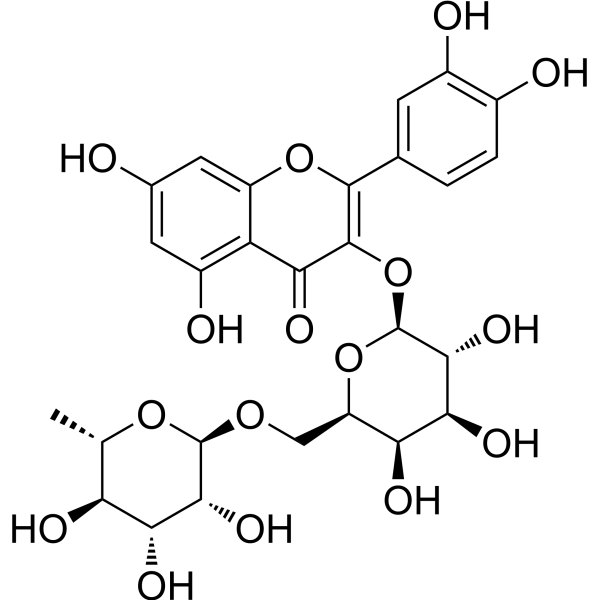
Cat. No.: HY-N1583
CAS No.: 52525-35-6
Quercetin 3-O-robinobioside can be isolated from the leaves of Strychnos variabilis .
loading...
    loading...
1
1 Cited Publications
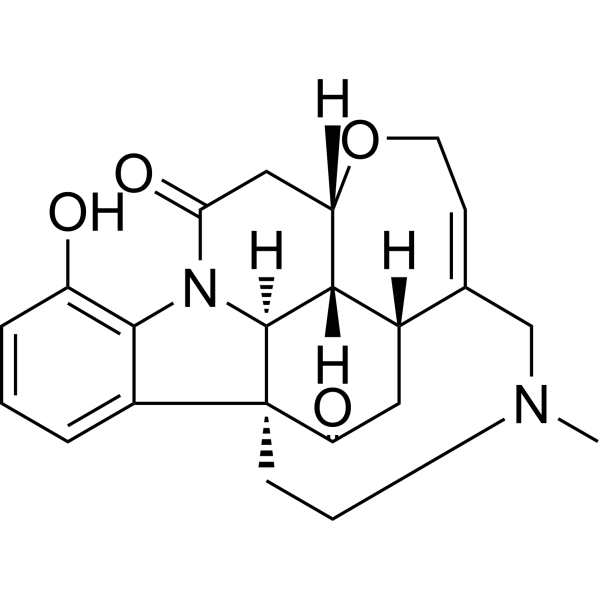
Cat. No.: HY-N2616
CAS No.: 125-15-5
Vomicine modulates cGAS-STING-TBK1 signaling pathway, and exhibits anti-inflammatory activity. Vomicine is an alkaloid that can be isolated from Strychnos nux-vomica seeds .
loading...
    loading...
Cat. No.: HY-N15383
CAS No.: 1398-17-0
Synonyms: Bakankosine
Bakankosin (Bakankosine) is a monoterpene glycoside that can be isolated from Strychnos nux vomica .
loading...
    loading...
Cat. No.: HY-117164
CAS No.: 85335-06-4
Longicautadine is a bisindole alkaloid that can be isolated from the root and stem bark of Strychnos nux vomica.
loading...
    loading...
Cat. No.: HY-17389A
CAS No.: 76267-48-6
7-Deoxy-10-hydroxyloganetin is a Iridoids product that can be isolated from the seeds of Strychnos nux-vomica .
loading...
    loading...
Cat. No.: HY-N2616R
CAS No.: 125-15-5
Vomicine (Standard) is the analytical standard of Vomicine. This product is intended for research and analytical applications. Vomicine modulates cGAS-STING-TBK1 signaling pathway, and exhibits anti-inflammatory activity. Vomicine is an alkaloid that can be isolated from Strychnos nux-vomica seeds .
loading...
    loading...
Cat. No.: HY-N17568
CAS No.: 350027-37-1
Secostrychnosin is a secoiridoid found in the stem of Strychnos cathayensis .
loading...
    loading...
Cat. No.: HY-N19310
CAS No.: 10012-73-4
Stemmadenine is a strychnos-type monoterpenoid indole alkaloid that serves as a biosynthetic precursor of the monoterpenoid indole alkaloid skeleton .
loading...
    loading...
Cat. No.: HY-N16779
CAS No.: 40041-96-1
Angustine is a monoterpene indole alkaloid vasodilator. Angustine exhibits potent vasodilatory activity on isolated rat aorta at a concentration of 10 μM (vasodilation rate exceeding 90%). Angustine can be used in the study of diseases such as hypertension, cerebral vasospasm, and peripheral circulatory disorders. Angustine can be naturally extracted from the bark of Nauclea officinalis and is also present in plants of the genera Mitragyna, Uncaria, and Strychnos .
loading...
    loading...

